Sleep Sounds: How to Build a Calming Bedtime Ritual
Explore how sleep sounds like white noise, rain, and soft music can ease your evening wind-down. Learn a simple ritual and start tonight.
Sleep sounds are one of the simplest ways to make an evening feel softer, and they are easy to start tonight. Think of them as a gentle backdrop: steady rain, a low fan hum, or slow ocean waves that tell your mind the day is done.
Quick answer: Sleep sounds are steady, quiet audio played at bedtime to mask sudden noise and signal a slow-down. Keep the volume low, choose one sound you enjoy, and repeat it nightly as part of a consistent ritual.
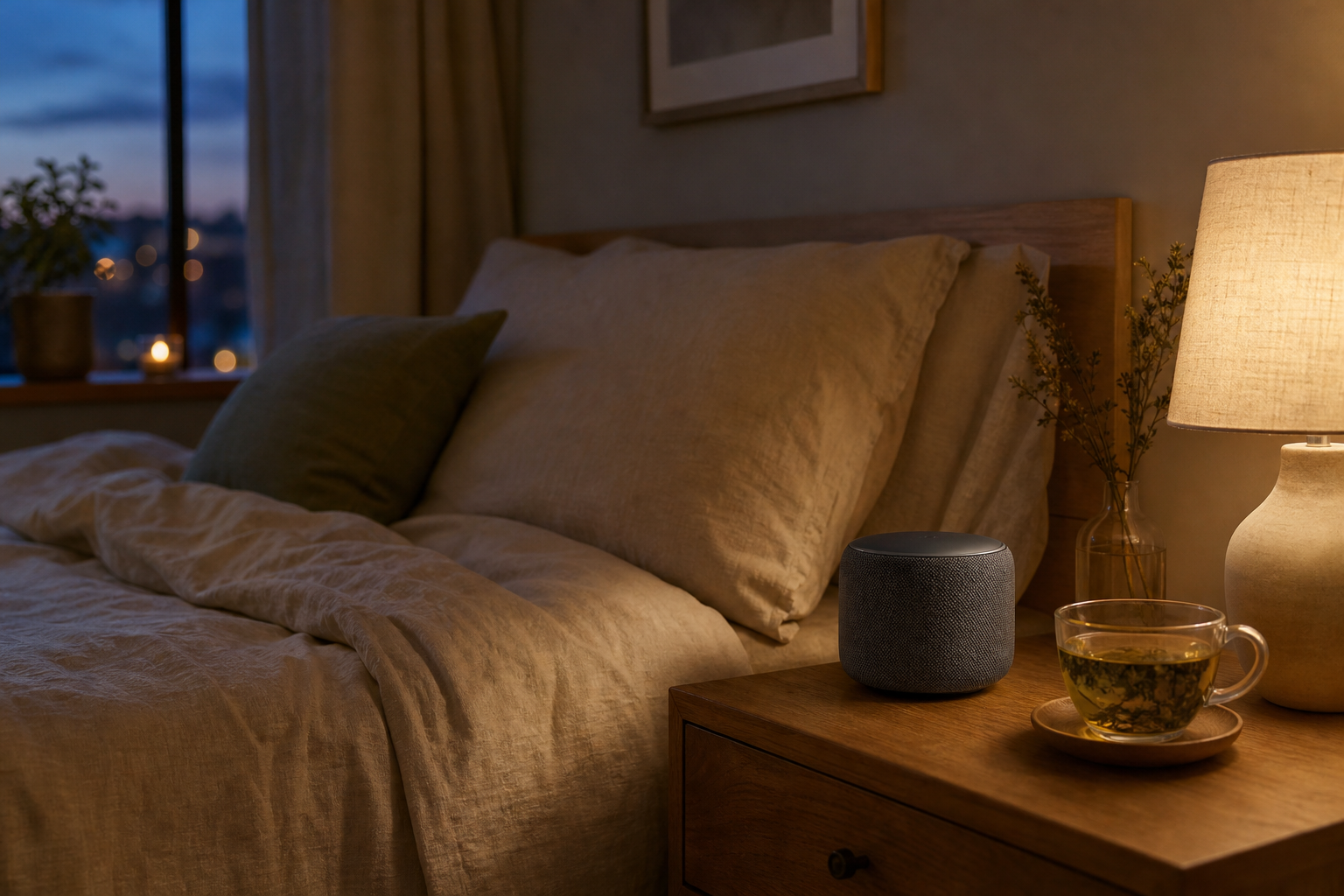
A quiet bedroom, a warm lamp, and soft sleep sounds can set the tone for the evening.
What Are Sleep Sounds?
Sleep sounds are calm, steady audio that you play while winding down or drifting off. Common choices include white noise, pink noise, rainfall, forest ambience, ocean waves, and soft instrumental music.
The idea is not to entertain you. Instead, a consistent sound smooths out the small noises of a house, such as a creaking floor or a passing car. As a result, the room feels more even and quiet.
Why Calming Bedtime Audio Can Feel So Soothing
Our ears keep listening even when we rest. Sudden, uneven sounds can pull attention back to the surface. A steady sound gives your mind something gentle to settle on, so small disturbances stand out less.
Routine matters too. When you play the same sound at the same time each night, your mind begins to link it with rest. The Sleep Foundation shares general guidance on building a restful sleep environment, including keeping the bedroom quiet, dark, and cool.
Types of Sleep Sounds to Try
Everyone hears differently, so it helps to sample a few. Here is a simple guide to the most popular options.
| Sound | What it feels like | Good for |
|---|---|---|
| White noise | Even, airy hiss | Masking street or household noise |
| Pink noise | Deeper, like steady rain | A softer, warmer backdrop |
| Rain and thunder | Cozy and enclosed | Anyone who loves nature sounds |
| Ocean waves | Slow, rhythmic rise and fall | Pairing with slow breathing |
| Soft instrumental music | Gentle and melodic | Early evening wind-down |
White Noise vs. Pink Noise
White noise has equal energy across frequencies, so it sounds like a hiss. Pink noise leans lower, which many people find rounder and less sharp. For more background, see the overview of white noise on Wikipedia.
How to Build a Bedtime Ritual With Sleep Sounds
A ritual works best when it is small and repeatable. Follow these steps, and adjust them to fit your home.
- Set a consistent time. Choose a wind-down hour you can repeat most nights.
- Dim the lights. Lower the lamps and put screens away about thirty minutes before bed.
- Pick one sound. Place a small speaker across the room at a low volume.
- Add a calming touch. Try herbal tea, stretching, or a warm bath, in the same order each night.
- Set a fade-out timer. Let the sound taper off once you settle, then notice how you feel in the morning.

Rain, warm tea, and low light make a gentle pairing for an evening wind-down.
Pairing Nighttime Audio With Other Gentle Rituals
Sound is only one thread in an evening routine. Many people also enjoy a mineral bath soak, light stretching, or a few slow breaths. Together, these small acts tell your body that the day is ending.
Some adults also include hemp-derived CBD in their evening. At Barefoot Sunday, the range includes tinctures, bedtime gummies (some with CBN, CBG, or melatonin), and a mineral bath soak. Products are made in small batches in cGMP-certified U.S. facilities, and each batch is third-party tested with lab results published on the site.
To be clear, CBD is not FDA approved, and it is not a quick fix. If you are curious about the basics, the how CBD works guide explains it in plain language. You can also browse the CBD FAQ page or read more about the brand in the press section.
Common Mistakes to Avoid
- Playing audio too loudly. Aim for quieter than a conversation.
- Changing tracks every night. Consistency builds the association.
- Starting the sound on a bright phone screen. Set it up before you dim the lights.
- Expecting instant results. Give a new routine one to two weeks.

Nature recordings, like a quiet stream, are a favorite kind of sleep sounds for many listeners.
Frequently Asked Questions
What are sleep sounds?
Sleep sounds are steady, soothing audio such as white noise, pink noise, rain, ocean waves, or soft instrumental music played at bedtime. They are used to soften the room's background and make the evening feel calmer.
Do sleep sounds really help you rest?
Many people find that steady sound helps mask sudden noises and signals that it is time to wind down. Results vary from person to person, so it is worth testing a few options.
What is the difference between white noise and pink noise?
White noise spreads energy evenly across all frequencies and sounds like a hiss. Pink noise has more energy in lower frequencies, so it sounds softer and deeper, like steady rainfall.
How loud should sleep sounds be?
Keep them low, roughly the volume of a quiet conversation or softer. They should sit gently in the background, never compete with your thoughts.
Should sleep sounds play all night?
That depends on your preference. Some people use a timer to fade the audio out after they settle, while others like a constant sound to cover household noise.
Which sleep sounds are best for beginners?
Gentle rain, a soft fan hum, and slow ocean waves are easy starting points. Try one for a week before switching.
Can I use a speaker instead of headphones?
Yes, a small speaker placed across the room is usually more comfortable. Headphones can be uncomfortable when you lie on your side.
Can I pair sleep sounds with a CBD bedtime routine?
Many people add hemp-derived CBD to an evening ritual alongside quiet sound and dim light. CBD is not FDA approved, and you should check with your physician before starting a new dietary supplement.
Will CBD make me high?
Hemp-derived CBD products are not meant to produce a high. Reading the third-party lab results for each batch helps you understand exactly what is inside.
Are sleep sounds safe for children and pets?
Soft, low-volume sound is generally fine, but keep any device out of reach and avoid high volumes. For infants and pets, ask your pediatrician or veterinarian.
What are common mistakes with sleep sounds?
The most common mistakes are playing audio too loudly, switching tracks every night, and using a bright phone screen to start it. Keep it simple and consistent.
How long before sleep sounds feel natural?
Give a new routine about one to two weeks. Consistency teaches your mind to link the sound with the end of the day.
Closing Thoughts
Sleep sounds work best as part of a simple, honest ritual: dim light, one steady sound, and a few quiet moments you repeat each night. Start small, stay consistent, and let the routine grow gently. If you would like to explore plant-based additions, visit Barefoot Sunday to learn more.
These statements have not been evaluated by the FDA and are not intended to diagnose, treat or cure any disease. Always check with your physician before starting a new dietary supplement program. Consult a physician before using cannabidiol (CBD) in any form during pregnancy or while breastfeeding.
Age restrictions apply: the site requires visitors to be 21+, and products are not for persons under 18. Promo codes require a $50 minimum purchase.
