Sleep Hygiene Tips for a Calmer, Restful Night
Try these sleep hygiene tips to build a gentle evening ritual, set up your bedroom, and wind down naturally. Read the guide and start tonight.
Good sleep hygiene tips are really just gentle habits that help your body remember how to rest. Sleep hygiene is the set of daily routines and bedroom conditions that support steady, restful sleep. Nothing here is a quick fix. Think of it as a quiet ritual you build one evening at a time.
The short answer: Keep a steady wake time, dim the lights in the evening, limit caffeine and screens, and keep your bedroom cool, dark, and quiet. Small, consistent choices matter more than perfect ones.
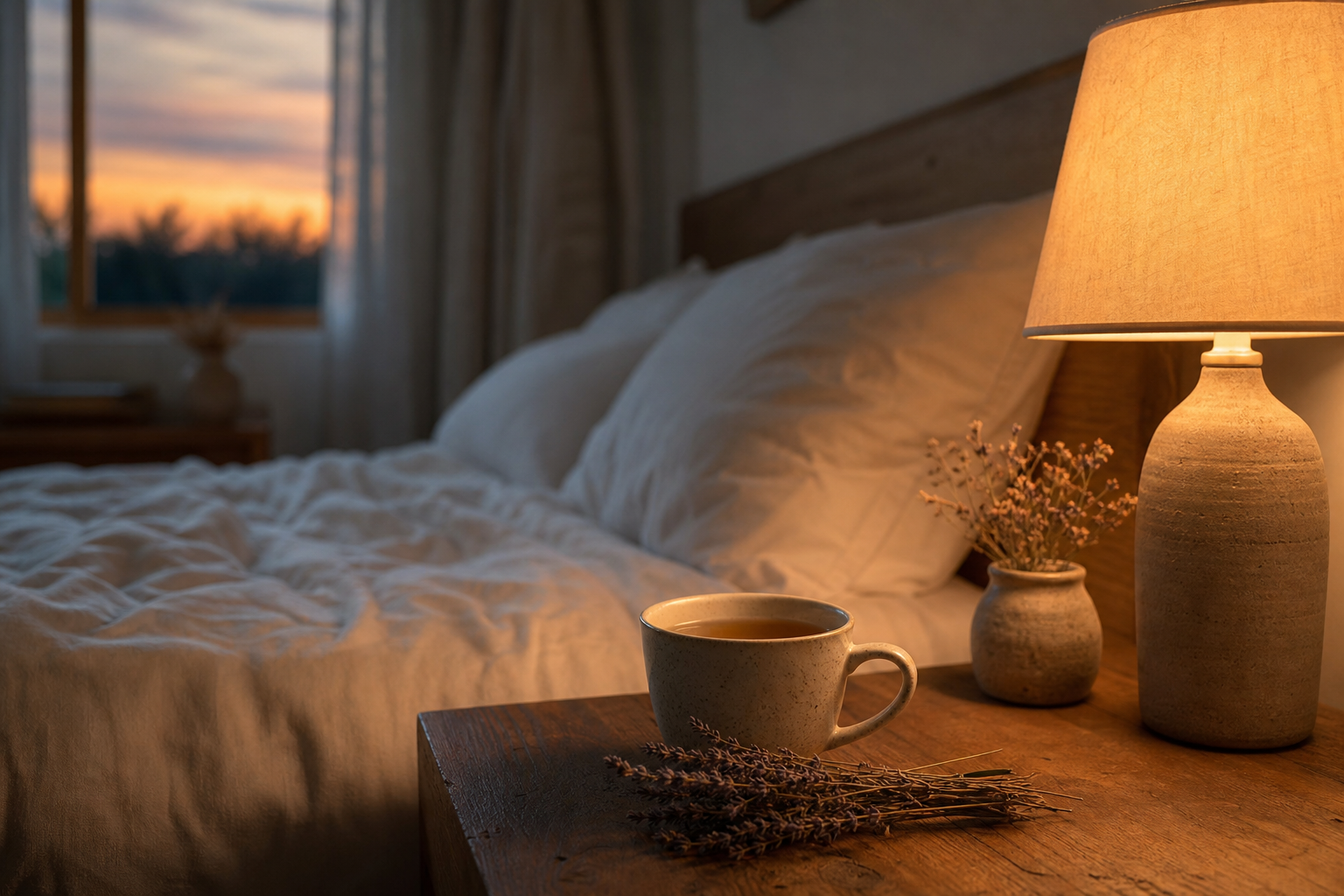
A softly lit bedroom is a simple starting point for sleep hygiene tips.
What Are Sleep Hygiene Tips?
Sleep hygiene tips are practical habits that make falling asleep and staying asleep easier. They cover your schedule, light, food, movement, and wind-down routine. The idea is explained in more depth on Wikipedia's sleep hygiene page.
The CDC notes that most adults need at least 7 hours of sleep each night. You can read more on the CDC website. Because everyone is different, treat these ideas as a menu rather than a rulebook.
Keep a Steady Sleep Schedule
Your body loves rhythm. Therefore, waking at the same time each day helps your internal clock settle. Start with the wake time, and let bedtime follow.
Weekends can drift, of course. Even so, try to stay within an hour of your usual time. Morning daylight also helps, so step outside for a few minutes if you can.
Create a Restful Bedroom Environment
Your room should feel like a quiet retreat. In particular, aim for cool, dark, and calm.
- Keep the room cool, often around 60 to 67°F.
- Use blackout curtains or a soft eye mask.
- Try earplugs or a gentle fan for steady background sound.
- Save your bed for sleep and quiet rest.
- Choose bedding that feels soft and breathable.

A quiet evening ritual, such as tea and journaling, signals that the day is done.
Mind Your Evening Habits
Caffeine, Meals, and Alcohol
Caffeine can stay in your system for hours. As a result, many people do better switching to herbal tea after lunch. Similarly, large late meals and alcohol can interrupt rest, even if they feel relaxing at first.
Screens and Light
Bright light tells your brain it is still daytime. Consequently, dim the lamps and put screens away 30 to 60 minutes before bed. A paper book is a lovely replacement.
Movement and Naps
Daily movement supports better rest. Gentle stretching suits the evening, while harder workouts often fit better earlier. Keep naps short and before mid-afternoon.
A Step-by-Step Wind-Down Routine
Here is a simple evening ritual you can start tonight.
- Set a fixed wake time you can keep every day.
- Dim the lights about an hour before bed.
- Put screens away 30 to 60 minutes before sleep.
- Choose a quiet ritual such as a warm bath, stretching, or journaling.
- Settle into a cool, dark room and take a few slow breaths.
Where Plant-Based Rituals Can Fit
Some adults like to add a plant-based touch to their evening. For example, a warm soak or a calming routine can feel grounding. Barefoot Sunday offers hemp-derived CBD tinctures, bedtime gummies (some with CBN, CBG, or melatonin), and a mineral bath soak. They are made in small batches in cGMP-certified U.S. facilities, and every batch is third-party tested, with lab results published on the site.
CBD is not FDA approved, and it is not a replacement for good habits. To learn more, see how CBD works or browse the Barefoot Sunday FAQ. For more gentle ideas, visit the wellness blog. Products are for adults 21 and older.
Frequently Asked Questions
What are sleep hygiene tips?
Sleep hygiene tips are everyday habits and bedroom adjustments that make it easier to fall asleep and stay asleep. They cover your schedule, light, food, movement, and evening routine.
How many hours of sleep do adults need?
The CDC suggests most adults get at least 7 hours of sleep per night. Needs vary a little from person to person.
What time should I stop using screens before bed?
Aim to put screens away 30 to 60 minutes before bed. Bright light and active content can keep your mind switched on.
What is the best bedroom temperature for sleep?
A cool, comfortable room is usually best, and many sleep organizations suggest about 60 to 67 degrees Fahrenheit. Adjust to what feels right for you.
Does caffeine really affect sleep?
Yes. Caffeine can linger in the body for hours, so many people do better skipping it in the afternoon and evening.
How long does it take for new sleep habits to work?
Many people notice small changes within a week or two, though results vary. Consistency matters more than perfection.
Is napping bad for sleep hygiene?
Not always. A short nap earlier in the day is usually fine, while long or late naps can make bedtime harder.
Should I exercise in the evening?
Gentle movement such as stretching or a slow walk can suit an evening routine. Intense workouts close to bedtime are better moved earlier for some people.
What should I do if I can't fall asleep?
Get up, keep the lights low, and do something quiet until you feel sleepy. Then return to bed so your bed stays linked with rest.
Can a wind-down ritual include CBD?
Some adults add hemp-derived CBD to an evening ritual. CBD is not FDA approved, and you should check with your physician first.
Are Barefoot Sunday products third-party tested?
Yes. Each batch undergoes third-party testing for purity and potency, and lab results are published on the site.
Is CBD okay during pregnancy or breastfeeding?
Consult a physician before using cannabidiol (CBD) in any form during pregnancy or while breastfeeding.
Morning light helps anchor the routine you build at night.
Conclusion
Sleep hygiene tips come down to a steady schedule, a calm bedroom, mindful evening habits, and a simple wind-down ritual. Start with one or two changes and let them settle in. If you would like a plant-based touch, explore Barefoot Sunday and shop when it feels right.
These statements have not been evaluated by the FDA and are not intended to diagnose, treat or cure any disease. Always check with your physician before starting a new dietary supplement program. Consult a physician before using cannabidiol (CBD) in any form during pregnancy or while breastfeeding. Products are not for persons under 18. Promo codes require a $50 minimum purchase.
