Sleep Deprivation: Gentle Habits for Better Rest Tonight
Sleep deprivation affects mood, focus, and energy. Learn what causes it, gentle evening rituals that help, and when to see a doctor. Read more.
Sleep deprivation is what happens when you regularly get less sleep than your body needs. It can sneak in after a stressful week, a new baby, a late-night habit, or months of restless nights. This gentle guide explains what it is, how to spot it, and which calm evening rituals may help you drift back toward rest.
The short answer: Adults need at least 7 hours of sleep a night, according to the CDC. Steady wake times, softer evenings, and a repeatable ritual are the most reliable ways to start rebuilding rest. There is no overnight fix.
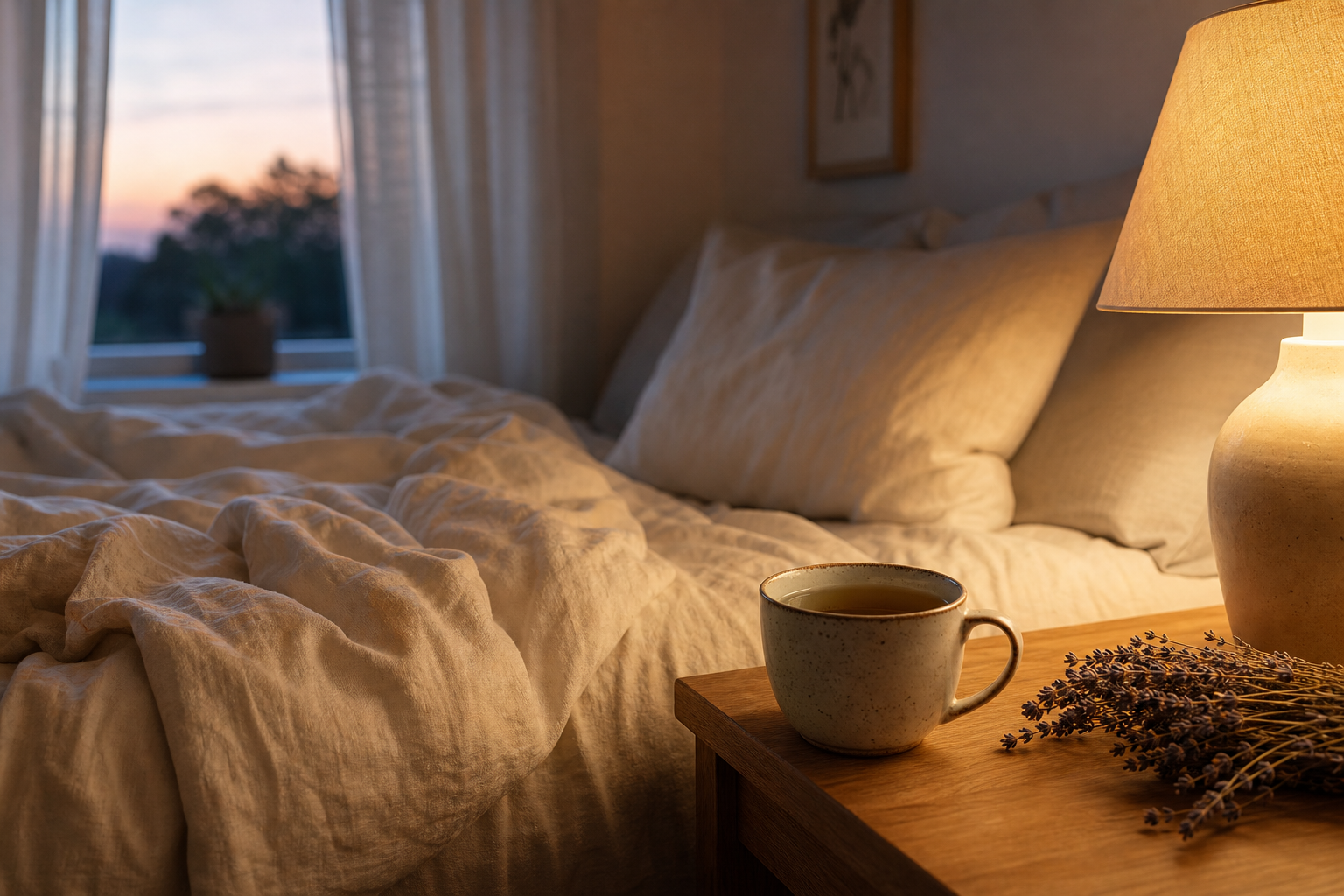
A quiet, softly lit bedroom is a good starting point when sleep deprivation has been building.
What Is Sleep Deprivation?
Sleep deprivation means not getting enough sleep to feel rested and function well. It may be acute, such as one or two short nights, or chronic, where the shortfall stretches on for weeks or months. Researchers sometimes call the running total "sleep debt." You can read a general overview on Wikipedia's sleep deprivation page.
It is also different from a sleep disorder. Sleep deprivation usually comes from not leaving enough time for rest. A sleep disorder, in contrast, can disrupt your nights even when you spend plenty of hours in bed.
Why Not Getting Enough Sleep Happens
Most of the time, it is a pile-up of small things. Busy schedules, late screens, evening caffeine, shift work, and a racing mind all take a bite out of the night. In addition, irregular bedtimes can confuse your body clock, which is the internal rhythm that tells you when to feel alert or sleepy.
- Late-night work, scrolling, or television
- Caffeine or alcohol close to bedtime
- Inconsistent wake times from day to day
- A bedroom that is too bright, warm, or noisy
- Caring for young children, pets, or family members at night
Signs You May Be Short on Rest
Your body usually tells you. For example, you may reach for extra coffee, forget small details, or feel more easily frustrated than usual. Reaction times can slow as well, which matters when you are driving.
The National Heart, Lung, and Blood Institute at NIH notes that ongoing sleep shortfalls are linked with broader health concerns. Therefore, it is worth taking seriously, not simply pushing through.
How to Build a Wind-Down Ritual
A ritual is simply a gentle, repeatable pattern. It tells your body the day is softening. Here is one simple way to start.
- Set a steady wake time. Keep it the same every day, weekends included.
- Dim the lights. An hour before bed, lower the lamps and set screens aside.
- Cut off caffeine early. Leave the afternoon coffee for the morning.
- Choose one calming practice. Try a warm bath, stretching, journaling, or herbal tea.
- Keep your bedroom cool and dark. Save your bed for rest.

Small, repeatable rituals tell the body that the day is slowing down.
Where Plant-Based Support Fits In
Some adults like to add plant-based products to their evening routine. Barefoot Sunday, based in Riverhead, New York, offers hemp-derived CBD tinctures and gummies, including bedtime formulas, some with CBN, CBG, or melatonin. The hemp is organically grown, products are made in small batches in cGMP-certified U.S. facilities, and each batch is third-party tested, with lab results published on the site.
To be clear, CBD is not FDA approved, and it is not a quick fix for sleep deprivation. Think of it as one quiet part of a larger ritual, alongside consistent habits. Customers must be 21 or older to enter the site, and products are not for anyone under 18. Promo codes require a $50 minimum purchase.
You can learn more through the brand's FAQ page, read customer reviews, or find a farmers market or practitioner location. In addition, the press page and attributions page share more of the story behind the products.
These statements have not been evaluated by the FDA and are not intended to diagnose, treat or cure any disease. Always check with your physician before starting a new dietary supplement program. Consult a physician before using cannabidiol (CBD) in any form during pregnancy or while breastfeeding.
Health information from the CDC recommends at least 7 hours of sleep for adults.
When to Talk With a Doctor
Reach out if you feel exhausted most days despite enough time in bed. The same goes for loud snoring, pauses in breathing, or drowsiness while driving. A physician can look for underlying causes that habits alone cannot address.
Frequently Asked Questions
What is sleep deprivation in simple terms?
Sleep deprivation means regularly getting less sleep than your body needs. It can be short-term, like one rough week, or ongoing over months.
How many hours of sleep do adults need?
The CDC recommends that adults get at least 7 hours of sleep per night. Needs vary a little from person to person.
What are the first signs of sleep deprivation?
Common early signs include daytime drowsiness, trouble focusing, irritability, and craving extra caffeine. Slower reactions and forgetfulness often follow.
Can you catch up on lost sleep?
A little extra rest can help you feel better, but it may not fully undo a long stretch of short nights. Steady nightly habits work better than weekend marathons.
How long does it take to recover from sleep deprivation?
Recovery depends on how long and how severe the shortfall was. Many people feel better within days of consistent sleep, while longer stretches may take weeks.
Does caffeine fix sleep deprivation?
No. Caffeine can mask drowsiness for a while, but it does not replace sleep, and late-day caffeine may make the next night harder.
What is the difference between sleep deprivation and a sleep disorder?
Sleep deprivation usually comes from not allowing enough time for sleep. A sleep disorder is a medical condition, such as sleep apnea, that disrupts sleep even when you give yourself enough time.
Can a nightly ritual help with sleep deprivation?
A consistent wind-down ritual can help your body recognize that it is time to rest. It is a supportive habit, not a quick fix.
Do CBD gummies cure sleep deprivation?
No. CBD is not FDA approved and is not intended to diagnose, treat, or cure any condition. Some adults include it in an evening ritual as plant-based support, alongside steady sleep habits.
Is it okay to use CBD while pregnant or breastfeeding?
Consult a physician before using cannabidiol (CBD) in any form during pregnancy or while breastfeeding.
When should I talk to a doctor about my sleep?
Reach out if you feel exhausted most days despite enough time in bed, snore loudly, or stop breathing at night. Persistent sleepiness while driving is also a reason to call promptly.
A Gentle Way Forward
Sleep deprivation builds slowly and eases slowly, so patience matters. Aim for at least 7 hours, keep a steady wake time, soften your evenings, and choose one ritual you enjoy. If you want plant-based support in that routine, remember it is only one small piece, and check with your physician first. Start tonight, keep it simple, and let rest return one quiet evening at a time.
